Entry of
Where archival and newsreel footage actually lives
Archive footage is not held in one place, and the places that hold it do not work the same way. Some own the rights, some only own the film.
ArchiveSources10 min read
Archive footage is not held in one place, and the places that hold it do not all work the same way. Some own the rights, some only own the film, and some own neither and are simply very good at finding both. Knowing which kind of organisation you are writing to changes the question you ask and the answer you get.
Three kinds of holder
- Public and national collections
- Archives, libraries and government agencies whose purpose is preservation and access. Deep holdings, published finding aids, modest or no license fees, but often long lead times and no rights warranty.
- Commercial archive libraries
- Businesses that own or exclusively represent collections and license them for a living. Faster, more expensive, and able to answer rights questions in writing, which is exactly what a production needs.
- Aggregators and general libraries
- Large platforms that carry archive collections alongside contemporary material. Convenient search, one invoice, and a rights statement that must still be read per item.
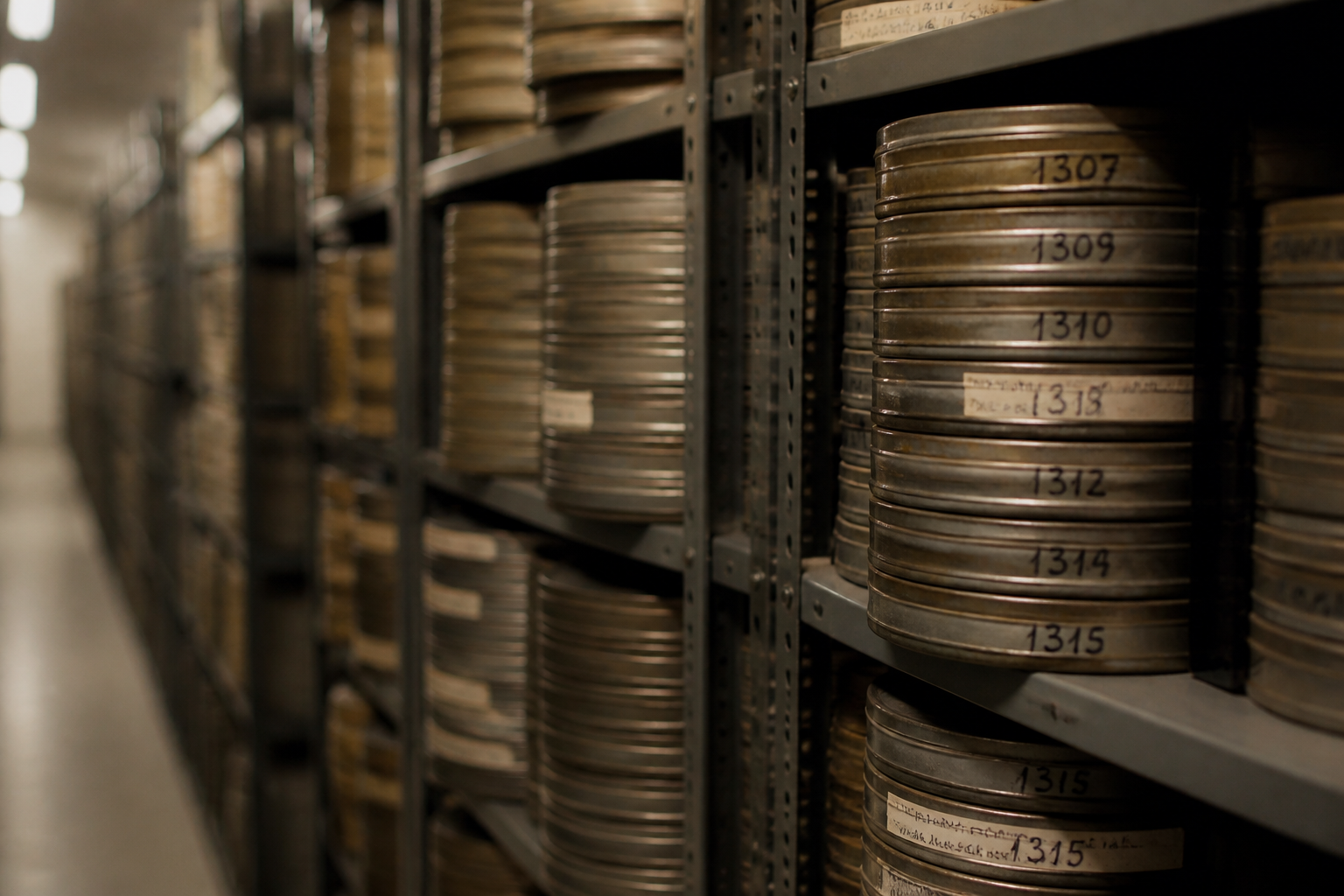
National and public collections
These are the first stop for twentieth century material, and for anything involving government activity.
- The National Archives and Records Administration holds the United States federal motion picture record, including military, agency and donated collections. Universal Newsreel, donated to the archive, covers American news from the late 1920s to the 1960s.
- The Library of Congress holds one of the largest film collections in the world, with a selected portion viewable online and finding aids describing what is only available on site.
- NASA publishes an extensive image and video catalogue, generally free of copyright as federal work.
- The BFI National Archive in the United Kingdom, the Institut national de l'audiovisuel in France, the Bundesarchiv in Germany and Eye Filmmuseum in the Netherlands are the equivalent national holders in their countries, each with its own licensing arm.
- Europeana aggregates cultural heritage material from European institutions, which makes it a useful index even when the licensing happens elsewhere.
- The International Federation of Film Archives maintains a directory of member archives worldwide, which is the fastest way to find the institution that holds a national cinema you do not know.
Newsreels, and who licenses them today
Newsreel companies stopped producing decades ago, but their libraries were bought, merged and are still actively licensed. The names on the cans and the names on the invoices are rarely the same.
- British Pathé licenses its own newsreel library directly, and publishes a large browsable preview catalogue.
- British Movietone material is licensed through AP Archive, the archive arm of the Associated Press, which also carries its own extensive news holdings.
- Reuters and ITN maintain their own news archives with international coverage.
- Getty Images represents a number of third-party archive collections alongside its own, which makes it a practical single point of search for mixed sequences.
- Universal Newsreel sits at the National Archives rather than with a commercial library, which is why American mid-century news is unusually accessible.
Ephemeral, industrial and everyday film
Newsreels record events. Advertising, training, educational and amateur film records ordinary life, which is usually what a documentary sequence actually needs.
- Prelinger Archives, hosted at the Internet Archive, is the reference collection of American advertising, educational, industrial and amateur film, with a large downloadable portion.
- The Media History Digital Library digitises trade press rather than film, and is the fastest way to date a production, confirm a release or find the name of a company that no longer exists.
- Regional and university archives hold local news, home movies and institutional film. They are underused, and the material is often unrepresented anywhere else.
- The Association of Moving Image Archivists is a professional body rather than a supplier, but its member list points to the specialist collection you are looking for.
Commercial archive houses
These are the businesses that documentary researchers call when the deadline is real. They differ from aggregators in one important way: they can usually tell you what they control, in writing, before you cut.
- Historic Films Archive, deep in music performance and twentieth century American material.
- The Kinolibrary, a London based collection strong in social history, home movies and unusual formats.
- Global ImageWorks and Producers Library, both long-established suppliers to documentary production.
- Framepool, with a strong nature, science and historical catalogue.
- Critical Past and Periscope Film, both specialised in United States government and military material.
The question that saves a month
Ask every supplier, in the first email: do you control the rights to this item, or do you hold a copy of it? Then ask what they will warrant in writing. An archive that answers "we hold the copy, the rights sit elsewhere" has just saved you from building a sequence you cannot clear.
| Holder | What you get | Verify | Usual pace |
|---|---|---|---|
| National archive | Depth, finding aids, low or no license fee | Rights status; who controls the title | Weeks |
| Agency archive | News coverage, dated and captioned | Territory limits on third-party items | Days |
| Archive house | Curated material, written warranties | Scope of the quote; research fees | Days |
| Aggregator | One search, one invoice | Editorial-only flags per item | Immediate |
| Regional collection | Material nobody else has | Transfer quality and formats available | Weeks |
Where to go next
Before writing to any of these, it is worth knowing what a researcher needs from you: the nine lines a footage research request needs is built from the questions archives ask back. And once a catalogue is open in front of you, how to search a footage database and actually find the shot covers why subject keywords fail on collections catalogued by production.