Entry of
What b-roll is for, and what makes a shot worth licensing
B-roll is the footage nobody notices and every edit depends on. It is also the category most often bought late, in a hurry, to fix a problem better planning would have prevented.
Craft8 min read
B-roll is the footage nobody notices and every edit depends on. It is also the category most often bought badly, because it is bought late, in a hurry, to fix a problem that better planning would have prevented.
Where the name comes from
In film finishing, the original negative was conformed onto two rolls, called A and B. Shots alternated between them, with black leader opposite each shot, so that splices fell in the unexposed areas and could not be seen in the print. The technique also made dissolves possible. The A roll carried the primary material, the B roll carried the alternate shots.
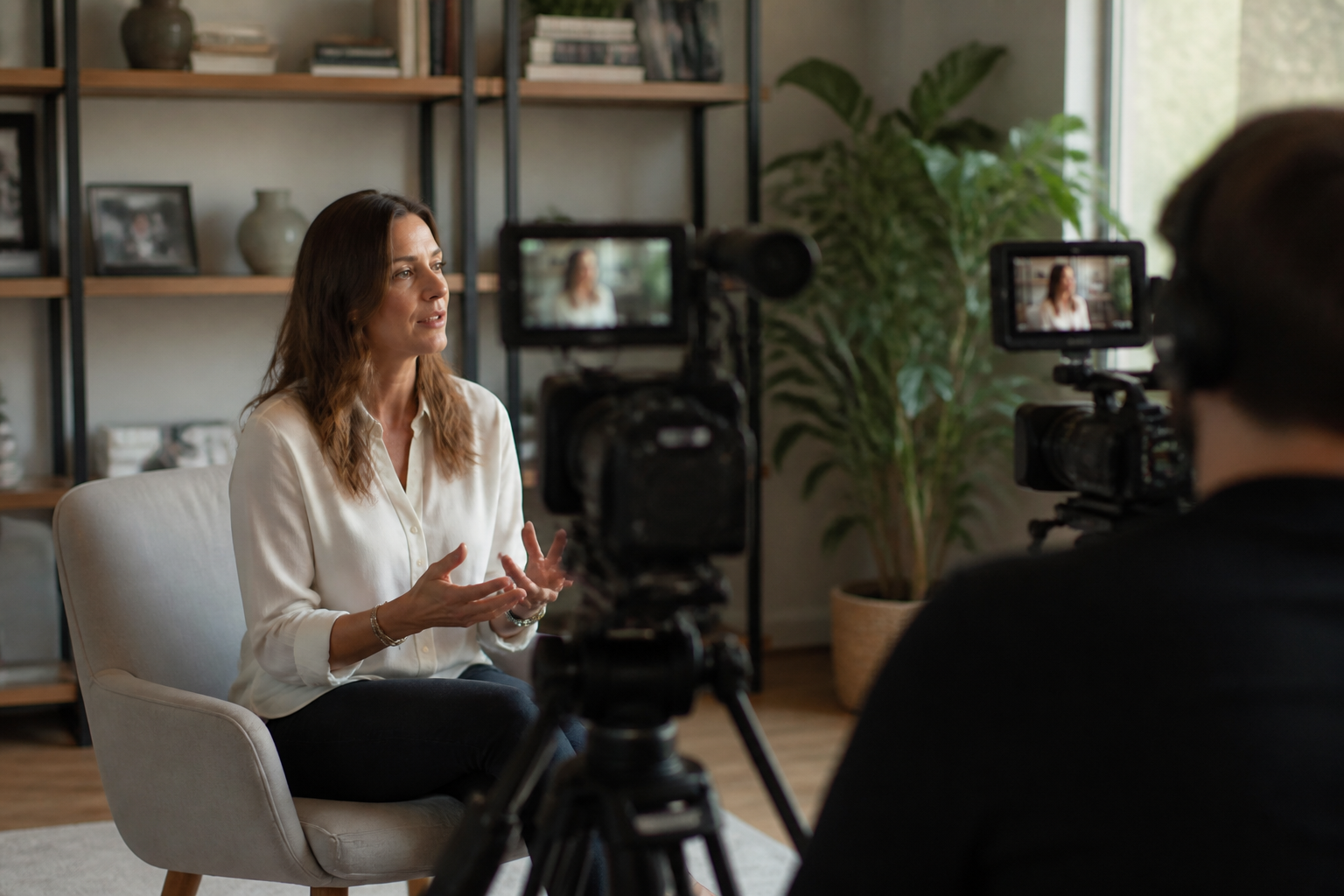
Television news borrowed the pair and changed the meaning. A-roll became the interview or the reporter; B-roll became everything cut over it. That second meaning is the one in use today.
The six jobs b-roll does
- Hides the join. Cutting an interview leaves a jump. A cutaway covers it and the sentence sounds continuous.
- Compresses time. Three shots of a journey stand in for an hour of it.
- Establishes place. One wide shot answers "where are we" so the dialogue does not have to.
- Shows what is described. A speaker explains a process; the process appears on screen.
- Gives the eye somewhere to go. Long stretches of a talking head lose attention even when the words are good.
- Carries the transition. Moving between two sequences is easier over an image than over a cut between two faces.
What separates usable b-roll from filler
- Motion inside the frame. Something must move, or the shot reads as a still and the edit stalls.
- A range of sizes. A wide, a medium and an insert of the same subject cut together. Three wides do not.
- Length. Shots need handles at both ends. A clip trimmed to the exact length of a sentence cannot be dissolved.
- Consistent light and era. Mismatched colour temperature, grain or period detail is what makes a sequence feel assembled.
- Clean or absent audio. Location sound under a cutaway helps; a stray voice saying something specific does not.
- No unintended information. Readable signage, visible logos and recognisable faces all narrow what the shot can be used for.
Matching archive b-roll to a modern sequence
Archive b-roll carries technical baggage that has to be planned for rather than fixed at the last minute.
| Problem in the cut | What solves it | Search terms that find it |
|---|---|---|
| Visible jump cut in an interview | A cutaway of the speaker or the subject | Insert, close-up, hands, detail |
| Audience does not know where we are | An establishing shot | Wide shot, exterior, aerial, city and date |
| Sequence feels static | Movement, either camera or subject | Tracking, dolly, handheld, crowd, traffic |
| Abstract idea with nothing on screen | A concrete process filmed in detail | The object and the verb, not the concept |
| Two eras cut together badly | A transitional shot in the older texture | Archival, the decade, the format, locked-off |
| Sequence needs to breathe | A held wide with slow internal motion | Locked-off, timelapse, landscape, weather |
Three technical points decide whether archive b-roll can be used at all: the frame rate, which may need conversion; the scan type, since interlaced material must be deinterlaced before it will cut cleanly with progressive footage; and the aspect ratio, since 4:3 material inside a 16:9 timeline has to be pillarboxed, cropped or deliberately framed. Deciding which of the three you will accept before searching saves discarding a shortlist afterwards. Each of them is read off the item page before you licence anything, and what you actually receive, and whether it will cut goes through the five fields that panel contains.
Shoot it or license it
The short version is below. The full comparison, with both cost columns totalled and the reuse question that usually decides it, is in license it or shoot it.
For b-roll specifically, the answer is usually a mix. Shoot what only exists in your story: the person, the place, the object at the centre of the film. License what is generic, historical, or would cost a day of travel to obtain. The mistake is licensing the specific and shooting the generic, which is what happens when b-roll is left to the end.
The clearance trap
B-roll is where editorial restrictions quietly enter a commercial project. A crowd scene contains recognisable people. A street scene contains shop signs and vehicle livery. An office scene contains screens showing software. All of that is acceptable in a documentary and none of it is safe in an advertisement without releases.
So flag the intended use before searching, not after. The release status filter is the fastest way to avoid building a sequence that cannot be used in the very piece it was meant for.
Where to go next
To turn that coverage list into an efficient search, see how to search a footage database and actually find the shot. To work out whether a b-roll package is cheaper licensed or shot, what footage costs sets both sides of the comparison out in full.